// STORM DAMAGE · ROOF DAMAGE DOCUMENTATION
Roof Damage Documentation
Aerial and ground-level evidence of every impact.
QUICK ANSWER
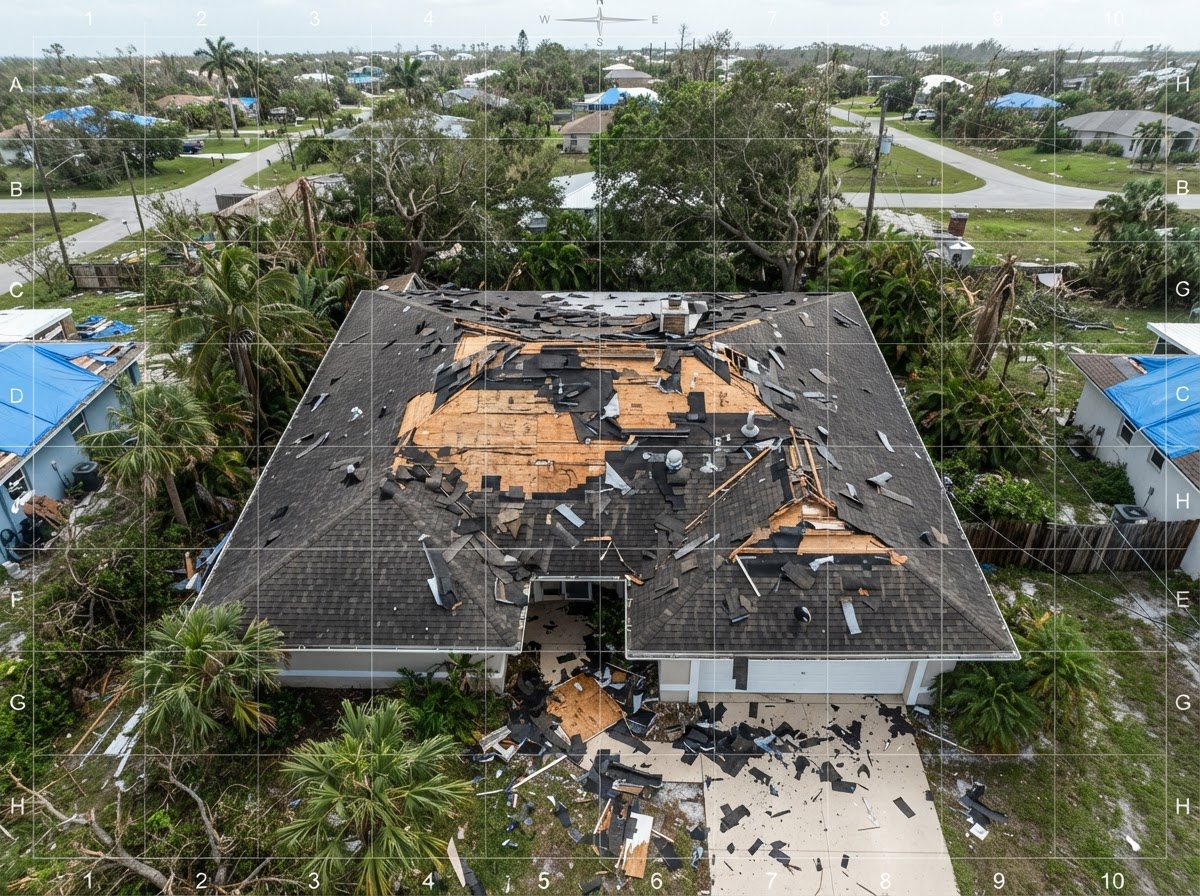
Roof damage documentation is the systematic recording of wind, impact, and water intrusion damage to a roof after a storm — using ground photography, drone imagery, and attic inspection — to capture the full scope before repairs begin. Aerial imagery often reveals damage not visible from the ground, making drone documentation a key part of the record.
// RELATED SERVICES
Scope of Work
SERVICE INVENTORY
- ROOF DAMAGE DOCUMENTATION
- DRONE AERIAL PHOTOGRAPHY
- GROUND-LEVEL PHOTOGRAPHY
- ATTIC INSPECTION
- SHINGLE & FLASHING DOCUMENTATION
- IMPACT DAMAGE RECORDING
- WATER INTRUSION DOCUMENTATION
- MOISTURE MAPPING
// ANSWER-FIRST CONTENT
Common Questions, Direct Answers
What is roof damage documentation?
Roof damage documentation is the systematic recording of wind, impact, and water intrusion damage to a roof after a storm. It combines ground-level photography, drone aerial imagery, and attic inspection to capture the full scope of damage before repairs begin or evidence is disturbed.
Why use a drone to document roof damage?
A drone safely captures high-resolution aerial imagery of roofs that are difficult or unsafe to reach after a storm. It documents the full roof surface — every slope, ridge, and penetration — quickly and reveals damage not visible from the ground, such as lifted shingles, missing flashing, or impact points.
What roof damage should be documented?
Missing, lifted, cracked, or creased shingles; damaged or missing flashing; damaged vents and penetrations; impact damage from debris or trees; and any interior evidence of water intrusion such as attic staining or ceiling discoloration. Wide shots show the full roof; close-ups show the detail.
How is water intrusion from roof damage documented?
The source of the intrusion is identified from above (the roof opening) and from below (the attic and interior). Attic inspection documents water staining on sheathing and framing, and interior inspection documents ceiling and wall discoloration. Moisture readings confirm whether materials are still wet.
What is the difference between wind damage and impact damage?
Wind damage typically shows as lifted, creased, or missing shingles where wind got under the roofing material. Impact damage shows as punctures, cracks, or dents from debris, hail, or fallen limbs. Both are documented with wide and close-up imagery so the cause and extent are clear.
How soon should roof damage be documented?
As soon as it is safe to do so after the storm. The longer damage goes undocumented, the more exposure there is to additional rain and the harder it becomes to distinguish storm-caused damage from subsequent deterioration. Prompt documentation — including temporary protection — limits further damage.
Can roof damage be missed from the ground?
Yes. Many forms of roof damage — lifted shingles, hairline cracks, small impact points, flashing damage — are not visible from the ground. Aerial drone imagery and attic inspection are used to capture damage that ground photography alone would miss, which is why both are part of the documentation.
How does roof documentation help with insurance?
A complete record — aerial imagery, ground photos, attic inspection, and moisture readings — provides objective evidence of the scope and cause of roof damage. This supports the insurance-loss communication far more effectively than a verbal report, and it documents the condition before any temporary repairs or tarping are applied.
// RELATED TOPICS & RESOURCES
// CREW RESTORATION
Request a Roof Damage Documentation Assessment
Aerial and ground-level evidence of every impact.
(813) 838-5961